Research Article | | Peer-Reviewed

Isolation and Antimicrobial Resistance of Staphylococcus aureus Associated with Respiratory Devices

Received: 27 February 2026     Accepted: 16 March 2026     Published: 28 March 2026
Views:       Downloads:
Abstract

Respiratory care devices used in oxygen therapy are essential in hospital settings, but may serve as reservoirs for pathogenic microorganisms if not properly maintained. Staphylococcus aureus is a major cause of healthcare-associated respiratory infections, on the other hand the emergence of antimicrobial resistance including multidrug resistance (MDR), presents significant treatment challenges. This study aimed at isolating S. aureus from respiratory care devices in regional referral hospitals and determining their antimicrobial susceptibility profile. A cross-sectional study was conducted from January to March 2024 in 29 regional referral hospitals across mainland Tanzania. A total of 231 samples were collected from humidifier water, device connectors, and reusable oxygen masks in Emergency departments, Intensive care units and Medical wards. Samples were enriched in Tryptic Soy Broth and cultured on Mannitol Salt Agar. Identification of S. aureus was performed using Gram staining, catalase tests and confirmation by PCR targeting the nuc gene. Antimicrobial susceptibility testing was conducted using the Kirby–Bauer disk diffusion method according to Clinical and Laboratory Standards Institute (CLSI) guidelines, 33rd edition. MDR was defined as resistance to at least three classes of antibiotic. Among the total isolates collected (N=231), 6.5% (n=15) were confirmed as S. aureus. There was no statistically significant difference in isolate distribution across hospital units or sample types (p > 0.05). High susceptibility was observed for ciprofloxacin and meropenem, while azithromycin showed the highest resistance among antibiotics tested while intermediate resistance was noted for erythromycin and trimethoprim. MDR was detected at 46.7% (n=7) of isolates, with variability observed across hospitals. Although the prevalence of S. aureus on respiratory care devices was low, the high proportion of MDR isolates highlights the need for continuous antimicrobial resistance surveillance, strict infection control practices, and strengthened antimicrobial stewardship programs in Tanzanian hospitals.

Published in Biomedical Sciences (Volume 12, Issue 1)
DOI 10.11648/j.bs.20261201.13
Page(s) 17-25
Creative Commons

This is an Open Access article, distributed under the terms of the Creative Commons Attribution 4.0 International License (http://creativecommons.org/licenses/by/4.0/), which permits unrestricted use, distribution and reproduction in any medium or format, provided the original work is properly cited.

Copyright

Copyright © The Author(s), 2026. Published by Science Publishing Group

Keywords

Staphylococcus aureus, Respiratory Care Devices, Antimicrobial Resistance, Multidrug Resistance, Oxygen Therapy

1. Introduction
Respiratory care devices are crucial components in administering supplemental oxygen. Oxygen is a life-saving medical gas used to treat respiratory illnesses and manage various healthcare needs such as emergency obstetric care, surgery and anaesthesia . Respiratory care devices regulate the amount of oxygen to suit the patient's requirements . These devices include a flow meter, humidifiers, nasal cannulas or prongs, simple face masks, non-breather masks and Venturi masks . The respiratory devices may contribute significantly to infection by acting as a reservoir and promoting microorganism growth if not properly managed. Nosocomial infections emerge while receiving healthcare services but are not present at the time of admission. Nosocomial infections affect over 100 million patients worldwide each year, causing a burden and increasing hospitalization time . S. aureus is among the gram-positive bacteria that colonizes respiratory devices . These bacteria are directly associated with respiratory illnesses that occur in healthcare settings . Patients can be exposed to these bacteria either through inhalation of aerosolized particles or direct physical contact S. aureus has been identified as one of the sources of community-acquired pneumonia and nosocomial respiratory infections, where immunocompromised and hospitalized individuals are the most affected . It is difficult to treat these infections due to the emergence of resistance to the commonly used antibiotics. Antimicrobial resistance (AMR) occurs when microorganisms become immune to antimicrobial agents . Bacteria may undergo resistance due to genetic modification through mutation, transduction, conjugation, transposition or transformation . According to a review of AMR, up to 10 million people could die each year from AMR by 2050, with poor countries being more vulnerable . In recent years, Methicillin resistance in S. aureus has become increasingly prevalent in healthcare and the community These resistances are developed by genetic changes that alter the binding protein, such as penicillin-binding protein (PBP), affecting penicillin-binding and other beta-lactamase antibiotics . S. aureus has been classified as a serious threat by the WHO due to its drug resistance . A previous study conducted in Tanzania found that the total prevalence of nosocomial infections was up to 14.8%, and the second most common was nosocomial respiratory infection which was found to be prevalent in intensive care units .
Tanzania Medicines and Medical Devices Authority (TMDA) is a regulatory authority tasked to ensure patient safety during oxygen therapy. This function is achieved by establishing various guidelines for managing, servicing, maintaining, cleaning and handling of medical devices and gases according to the prescribed standards. This is achieved by continuously monitoring the microbiological quality of medical devices used in oxygen therapy in hospital settings and establishing how colonized devices may have contributed to the spread of AMR for the antibiotics recommended for respiratory diseases. Therefore, the objective of this study was to isolate S. aureus from respiratory care devices used in oxygen therapy and establish the antimicrobial susceptibility profile of the colonizing bacteria in mainland Tanzania.
2. Methodology
2.1. Study Area
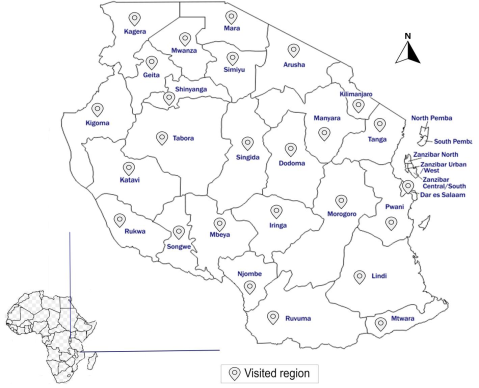
Figure 1. A map showing the Tanzania regions included in the study.
The study included 29 regional referral hospitals (RRH) in Tanzania mainland as shown in Figure 1. The RRH serve patients mostly referrals from district hospitals in the region and also provides for outpatient treatments. Respiratory care devices used in the emergency department, intensive care unit, and medical wards were included in the study. All RRHs were consecutively coded for ease of results presentation.
2.2. Study Design and Sampling Techniques
A cross-sectional study was conducted from January to March 2024. Purposive sampling with experiential criteria techniques was employed to locate hospitals and units . All RRHs in mainland Tanzania were included in this study. A team of trained laboratory analysts was assigned to carry out sample collection following the established sampling criteria and geographical mapping of Tanzania.
2.3. Sample Size Determination
A total of 261 samples were planned to be collected from hospitals in the following distribution: (n=87) samples from connectors, (n=87) from reusable masks, and (n=87) from humidifier.
2.4. Sample Collection and Transportation
2.4.1. Quality Control
Sterile sample collection tools were employed. Sampling tools such as swabs, Falcon tubes, and Pasteur pipettes, were checked for shelf life, sterilization date, and the integrity of the tools before being used.
2.4.2. Water Samples from the Humidifier
Water samples were obtained by using a sterile Pasteur pipette and transferring them to 15mL sterile Falcon tubes. Using an aseptic technique, water was collected from a humidifier and transferred to a Falcon tubes. The tube was then securely sealed and transported at cool temperature of 2-8°C to the TMDA microbiology laboratory for analysis within 24 hrs.
2.4.3. Swab Samples
Swab samples were obtained from the connection point of the humidifier and reusable oxygen masks or respirators. An aseptic technique was employed to obtain a sterile swab from a sealed packet, which was then utilized to swab the surface of a connecting point by rotating around the connector. Subsequently, the swab was transferred into transport media and appropriately labelled. The obtained samples were transported at a cool temperature of 2-8°C to the TMDA Microbiology laboratory within 24 hours.
2.5. Enrichment of Bacteria
Before isolation, all samples were enriched with nutrient broth media. Humidifier water was inoculated with Tryptic Soy Broth (Oxoid UK) at a 1: 10 ratio. Swab samples were also inoculated with Tryptic Soy Broth. Inoculated broth was incubated at 37°C for 24 hours, as per United States Pharmacopeia and the National Formulary (USP-NF) 38/43 2024 .
2.6. Isolation and Identification of S. aureus
2.6.1. Macro Morphology Identification
The enriched inoculum was sub-cultured by streaking on Mannitol Salt Agar (Oxoid-UK), a selective medium for Staphylococcus species. Medium-sized yellowish colonies with a slightly raised or convex appearance were maintained as S. aureus suspects for further identification as previously described .
2.6.2. Micromorphology Identification
Pure culture from Mannitol Salt agar was transferred into Nutrient Agar (Oxoid- UK) to obtain an overnight culture for biochemical tests and microscopic identification. Using the Gram staining technique, the pure, isolated colonies were smeared on slides, heat-fixed, and stained with Gram stain according to the manufacturer's procedures. They were then observed under a microscope using a 100X objective. Gram-positive cocci in clusters were then subjected to biochemical tests for S. aureus as previously described by Smith et. al .
2.6.3. Biochemical Tests
(i). Catalase Test
Gram-positive cocci isolates were tested for the presence of the Catalase enzyme. A sterile wooden stick was used to transfer an overnight pure culture of colon onto the surface of a clean, dry glass slide. Then a drop of 3% hydrogen peroxide was added to the glass slide. Positive isolates produced oxygen bubbles, as previously performed by Reiner et. al .
(ii). Coagulase Test
The test was performed as previously described by K. Reiner . All Catalase-positive isolates were further tested for their ability to coagulate the plasma, coagulase-positive as an indication of S. aureus were preserved for subsequent analyses and confirmation while coagulase-negative isolate was identified as other Staphylococcus spp.
2.6.4. Molecular Identification
(i). Genomic DNA Extraction
The boiling method was employed to lyse the bacterial cell to release the cellular components for extraction of genomic DNA of S. aureus, as previously described . In summary, colonies of overnight culture on nutrient agar were suspended in 100µL of nuclease-free water in Eppendorf tube. The tubes were then incubated in a water bath at 95°C for 5 minutes before being immediately transported to a freezer at -20°C for 10 minutes. The suspension was centrifuged at 12,000 rpm for one minute. A micropipette was used to transfer 80µl of the supernatant into a new sterile Eppendorf tube. The extracted DNA was kept at -20°C for the detection of the nuc gene in the subsequent analyses.
(ii). Detection of nuc Gene in S. aureus by PCR
Confirmation of S. aureus was carried out using the PCR test targeting the S. aureus nuc gene. A set of specific primers for S. aureus nuc gene forward 5’- GCATTGATGGTACGGTT-3’and revers 3’- AGCCAAGCCTTGACGAACTAAAGC-5' (Inqaba Biotech- South Africa) were used in this study as previously performed by Ghazi et. al . Master mix was prepared by adding 0.5µL of each forward and reverse primer into the PCR tubes, 16µL of nuclease-free water, and 5µL of pre-mix. Finally, a DNA template (3µL) was added, making a total of 25µL PCR reaction mixtures. PCR amplification conditions included an initial denaturation step at 95°C for two minutes by 1 cycle, followed by 35 cycles of denaturation at 95°C for 30s, annealing at 54°C for 30s and extension at 72°C for 30s, followed by one step of final extension at 72°C for 5minutes. The amplification products were analyzed using gel electrophoresis, 1% agarose stained with Ethidium bromide (0.5 µg/mL) was used. Maker (1000bp) was used to scale the migration of the DNA fragments on agarose gel. The PCR products were visualized using a UV trans-illumination machine to obtain gel electrophoresis image.
2.7. Antimicrobial Susceptibility Test
Antimicrobial susceptibility testing was performed using the Kirby-Bauer disc diffusion method and Mueller-Hinton Agar (MHA) (Oxoid-UK), results were interpreted based on the CLSI guidelines for performance standards for antimicrobial susceptibility testing . The S. aureus isolates were tested against the following antibiotics: Ciprofloxacin 5µg, Erythromycin 15µg, Sulphamethoxazole/Trimethoprim 1.25/23.75µg, Azithromycin 15µg, Clindamycin 2µg, Chloramphenicol 30µg and Gentamycin 10µg. These antibiotics were selected based on Standard Treatment Guidelines (STG) and National Essential Medicine List for Tanzania mainland . Overnight pure cultures of S. aureus were emulsified in sterile phosphate-buffered saline to obtain the turbidity equivalent to the 0.5 McFarland standard, which is approximately 1.5 × 10⁸ CFU/mL of bacteria cell concentration. After incubation, the zones of inhibition for each antibiotic were measured using calibrated Vernier caliper and the measurements were interpreted according to the Clinical and Laboratory Standards Institute (CLSI) guidelines, 33rd edition .
S. aureus with ATCC 25923 was used as the control strain during analysis. An isolate was referred to as MDR if it exhibited resistance to at least three different antibiotic classes as described in CLSI .
3. Results and Discussion
3.1. Sample Size and Response Rate
Sample size per hospital was determined by Mugenda and Mugenda (2003), who considered that a response rate of 50% is appropriate for analysis and reporting, a rate of 60% is reasonable, and a rate of 70% or more is excellent. Response of samples collected from all 29 referral hospitals was 88.8% (n=231) which was considered to be excellent. These samples included 85 from humidifiers, 85 from connectors, and 61 from reusable masks. These samples were collected from three departments in each hospital: 29 emergency departments, 27 intensive care units, and 29 medical wards. The variation observed in the number of samples and sampling areas was due to some of the hospitals no longer using reusable masks, and some did not have the intensive care unit.
3.2. Isolation and Identification of S. aureus
Collected samples (N=231) were subjected to Tryptic soy broth (Oxoid - UK) for enrichment and recovery, Inoculated broths were incubated in Memmert incubator (GmbH. Co. KG -Germany) for 24hrs at 37°C. The positive growths on the broths were subsequently subcultured into Mannitol salt agar (Oxoid-UK). Yellowish colonies on Mannitol agar plates were stained with Gram stain and also catalase and coagulase tests were performed on them. Upon Gram staining, the bacterial cells appeared purple, indicating a Gram-positive reaction, and are predominantly spherical cocci arranged in irregular, grape-like clusters, which is a defining characteristic of Staphylococcus species, as also described by S. Y. C. Tong et. Al . Among the isolates, 6.5% (n= 15) were identified as presumptive S. aureus and were preserved for subsequent confirmation by PCR.
3.3. Molecular Identification of S. aureus
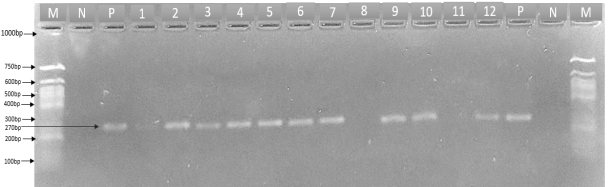
DNA from presumptive isolates was analyzed using PCR and gel electrophoresis imaging, and the results revealed that all 15 presumptive isolates previously detected by biochemical tests were confirmed to be S. aureus, by identifying the presence of the nuc gene on gel electrophoresis image as shown in Figure 2.
Figure 2. Agarose gel electrophoresis of PCR products. Lane M: 50 bp DNA ladder (50–1000 bp); Lane N: Negative control; Lane P: positive control; Lanes 1–12: test samples. A distinct band at approximately 270 bp was observed in the positive control and positive test samples.
3.4. Distribution of S. aureus Across Hospital Units
In this study, it was observed that from all samples that were collected (N=216) from the ICU, EMD, and Medical wards, only 6.5% (n=15) of isolates presented the culture characteristics, biochemical and molecular tests that were specific to S. aureus. The distribution of S. aureus isolates by hospital units are presented in Table 1.
Table 1. Distribution and chi-square analysis of S. aureus across hospital units.

Hospital units

S. aureus

Chi-square

P-value

Present [n (%)]

Absent [n (%)]

EMD

7(8.9)

72(91.1)

1.524

0.480

ICU

3(3.9)

73(96.1)

WARD

5(6.6)

71(93.4)

Total

15(6.5)

216(93.5)

3.5. Distribution of S. aureus per Sample Type
Assessment of microbial pathogen prevalence across connector, humidifier water and respirator samples demonstrated a low occurrence of S. aureus with 93.5% (n=216) of samples testing negative. The distribution across sample types was not statistically significant as the analysis of Chi square and p- value confirmed this (χ²=1.6, p=0.497).
Table 2. Distribution and Chi-square analysis of S. aureus across sample type.

Sample name

S. aureus

Absent [n (%)]

Present [n (%)]

Chi-square

P-value

Connector (CS)

80 (94.1)

5 (5.9)

1.6

0.497

Humidifier water (WS)

81 (95.3)

4 (4.7)

Respirator (RS)

55 (90.2)

6 (9.8)

3.6. Antimicrobial Susceptibility
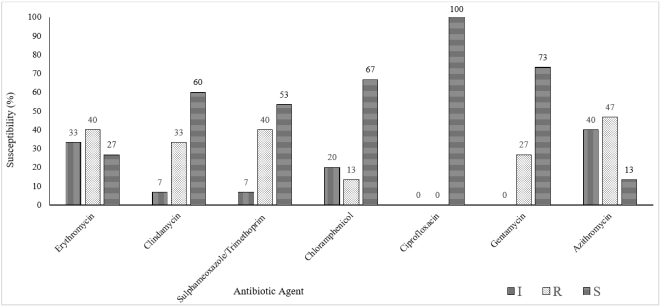
All confirmed isolates (n=15) were subjected to antimicrobial susceptibility testing against seven antibiotics recommended for treatment of respiratory infections in Tanzania. The susceptibility results were categorized into three classes namely; Intermediate (I), Resistant (R) and Susceptible (S) across all seven different antibiotics. Ciprofloxacin showed the highest efficacy in that all (100%) of the isolates were susceptible to. Azithromycin showed the lowest efficacy against the pathogen with resistance up to 40% of the isolates followed by Erythromycin with resistance up to 33% of the isolates as shown in Figure 3. Erythromycin and Sulphamethoxazole/Trimethoprim combination exhibited intermediate resistance, suggesting a potential for the isolates to develop more resistance. Consequently, effective treatment may require use of antibiotics in combination, this was also reported by other study . A high level of resistance displayed on Azithromycin in this study suggests the antibiotic to be least effective among the antibiotics tested. This could be explained by high consumption rate of the same drug as prophylactic among the remedies recommended for Covid 19 infection. This phenomenon may have been elevated during and post Covid 19 era as results of this study concurs with findings from other study . As a remedy for the observed findings this study suggests the use of combination of antibiotics in order to achieve maximum therapeutic success in treatment and to reduce further rise of antimicrobial resistance.
Figure 3. Antibiotic susceptibility patterns of S. aureus against selected antibiotics.
3.6.1. Multidrug Resistance Profile
Isolates are considered to be multidrug resistant if they display a resistance to more than three classes of antibiotics. In the current study, among the confirmed S. aureus, isolates of N=15, 46.67% (n=7) showed MDR against the tested antibiotics as shown Table 3. This implies that almost half of the isolates have displayed MDR. This is an alarming signal in public health in general due to the fact that S. aureus is an opportunistic pathogen and very abundant in hospital environments as previously suggested by other studies . These findings call for an extended study to depict the MDR in the wider population or hospital facilities in Tanzania especially at districts hospitals.
Table 3. Multidrug Resistance patterns in S. aureus.

MDR status

Frequency (n)

Percentage (%)

Positive

7

46.67

Negative

8

53.33

Total

15

100

3.6.2. Multidrug Resistance Patterns Across Hospitals
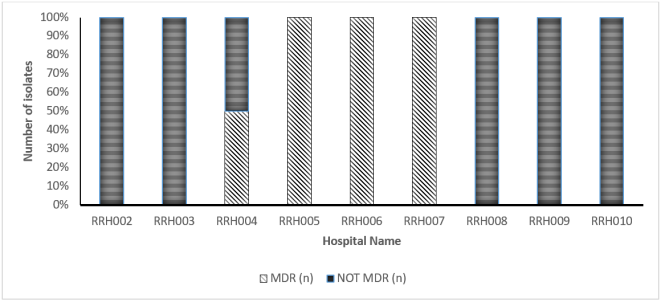
The analysis of MDR profiles of S. aureus across hospitals revealed that out of the hospital facilities with positive S. aureus 31% (N=9), (45%) (n=4) hospital facilities had MDR strains of S. aureus. Out of the four hospital facilities three were found to have pure MDR strains of S. aureus while one hospital had a mix of both MDR and non MDR strains of S. aureus. On the other hand, 55% of hospitals with positive S. aureus isolates had no MDR isolates as shown in Figure 4. This information is critical for healthcare providers to understand the prevalence of MDR strains to adjust treatment protocols and guidelines to manage and control the spread of resistant infections, other studies also reported similar findings .
Figure 4. Multidrug Resistance profiles of S. aureus across hospitals.

4. Conclusion
This study provides critical insights into the prevalence and antimicrobial resistance profiles of S. aureus associated with respiratory care devices. The low prevalence of these opportunistic pathogens in the sampled devices is encouraging, However, the presence of AMR, particularly MDR, poses significant treatment challenges. Effective antimicrobial stewardship, regular surveillance, and strict infection control protocols are essential to combat the growing threat of AMR. These measures will help ensure that antibiotics remain effective for treating infections, ultimately improving patient outcomes and reducing healthcare costs associated with prolonged hospital stays and treatment failures. This study recommends continuous monitoring of AMR patterns in hospital settings to detect and respond to emerging resistance trends. Furthermore, it promotes stringent infection control measures, including proper cleaning and maintenance of respiratory care devices including the rational use of antibiotics through targeted stewardship programs to minimize the development of resistance. The findings recommend that hospitals with MDR to implement stringent infection control measures and promote the rational use of antibiotics to prevent further resistance development.
Abbreviations

ATCC

American Type Culture Collection

CLSI

Clinical and Laboratory Standards Institute

EMD

Emergence Department

ICU

Intensive Care Unit

MDR

Multi Drug Resistance

PCR

Polymerase Chain Reaction

RRH

Regional Referral Hospital

NA

Nutrient Agar

SPP

Species

SPSS

Statistical Product and Service Solutions

TAE

Tris-acetate-EDTA

TMDA

Tanzania Medicines and Medical Devices Authority

TSB

Tryptose Soy Broth

USPNF

United States National Formulary

Author Contributions
Adelard Bartholomew Mtenga: Conceptualization, Data curation, Formal Analysis, Methodology, Supervision, Writing – original draft, Writing – review & editing
Adam Mitangu Fimbo: Project administration, Resources, Supervision, Writing – review & editing
Saxon Joseph Mwambene: Data curation, Investigation, Methodology, Writing – review & editing
Elizabeth Erasto Kasekwa: Data curation, Investigation, Methodology, Writing – review & editing
Shaban Bikiz Kombo: Data curation, Investigation, Methodology
Raphael Zozimus Sangeda: Writing – review & editing
Danstan Hipolite Shewiyo: Project administration, Supervision, Writing – review & editing
Data Availability Statement
The data supporting the outcome of this research work have been reported in this manuscript.
Conflicts of Interest
Authors declares no conflicts of interest.
References
[1] J. Belle et al., “Emerging Problems in Infectious Diseases Influenza preparedness in low-resource settings: a look at oxygen delivery in 12 African countries,” vol. 7, 2010.
[2] D. Devices and G. Committee, “O XYGEN T HERAPY AND D ELIVERY D EVICES,” no. November, pp. 1–20, 2024.
[3] B. R. O. Driscoll, L. S. Howard, J. Earis, V. Mak, and B. Thoracic, “BTS guideline for oxygen use in adults in healthcare and emergency settings,” 2017,
[4] Z. W. Taye, Y. A. Abebil, T. Y. Akalu, G. M. Tessema, and E. B. Taye, “Incidence and determinants of nosocomial infection among hospital admitted adult chronic disease patients in University of Gondar Comprehensive Specialized Hospital, North–West Ethiopia, 2016–2020,” Front. Public Heal., vol. 11, 2023,
[5] A. Combes, C. Luyt, J. Fagon, M. Wolff, J. Trouillet, and J. Chastre, “Early predictors for infection recurrence and death in patients with ventilator-associated pneumonia,” vol. 35, no. 1, 2007,
[6] A. Hansmann, B. May, and H. Lang, “African Journal of Emergency Medicine Review of supplemental oxygen and respiratory support for paediatric emergency care in sub-Saharan Africa,” African J. Emerg. Med., vol. 7, no. November, pp. S10–S19, 2017,
[7] S. Jadhav, T. Sahasrabudhe, V. Kalley, and N. Gandham, “The Microbial Colonization Profile of Respiratory Devices and the Significance of the Role of Disinfection: A Blinded Study,” 2013,
[8] R. Touaitia, A. Mairi, N. A. Ibrahim, N. S. Basher, T. Idres, and A. Touati, “Staphylococcus aureus: A Review of the Pathogenesis and Virulence Mechanisms,” vol. 2, pp. 1–37, 2025.
[9] T. Sandle, Pharmaceutical Microbiology. 2016.
[10] C. J. Murray et al., “Global burden of bacterial antimicrobial resistance in 2019: a systematic analysis,” Lancet, vol. 399, no. 10325, pp. 629–655, 2022,
[11] A. H. Hasanpour, M. Sepidarkish, A. Mollalo, A. Ardekani, and M. Almukhtar, “The global prevalence of methicillin - resistant Staphylococcus aureus colonization in residents of elderly care centers: a systematic review and meta - analysis,” Antimicrob. Resist. Infect. Control, vol. 6, pp. 1–11, 2023,
[12] S. Stefani and A. Goglio, “International Journal of Infectious Diseases Methicillin-resistant Staphylococcus aureus: related infections and antibiotic resistance,” vol. 4, pp. 19–22, 2010,
[13] X. Ba et al., “Novel mutations in penicillin-binding protein genes in clinical Staphylococcus aureus isolates that are methicillin resistant on susceptibility testing, but lack the mec gene,” no. November 2013, pp. 594–597, 2014,
[14] T. Lancet and I. Diseases, “Leading Edge A new dawn for global health ?,” Lancet Infect. Dis., vol. 9, no. 2, p. 73, 2009,
[15] T. C. Threat and M. Staphylococcus, “The Continuing Threat of Methicillin-Resistant Staphylococcus aureus,” 2019.
[16] P. S. Ho, “Antibacterial Discovery: 21st Century Challenges,” 2020.
[17] R. Gosling et al., “Annals of Tropical Medicine & Parasitology Prevalence of hospital-acquired infections in a tertiary referral hospital in northern Tanzania Prevalence of hospital-acquired infections in a tertiary referral hospital in northern Tanzania,” vol. 4983, no. April, 2017,
[18] O. Tajik, J. Golzar, and S. Noor, “Purposive Sampling,” vol. 2, no. November, pp. 1–9, 2024.
[19] United States Pharmacopeia and the National Formulary <71> STERILITY TESTS, 2024.
[20] B. Y. Khudaier, I. T. Anad, and B. A. Abbas, “ISOLATION OF Staphylococcus aureus FROM BUFFALO MILK IN BASRA GOVERNORATE AND DETECTION OF THEIR ANTIBIOTIC SUSCEPTIBILITY,” vol. 1, no. 1, pp. 1–11, 2014.
[21] A. C. Smith and M. A. Hussey, “Gram Stain Protocols,” no. September 2005, pp. 1–9, 2016.
[22] K. Reiner, “Catalase Test Protocol,” no. November 2010, pp. 1–9, 2016.
[23] S. Hassanzadeh, M. R. Pourmand, and D. Afshar, “Letter to the Editor TENT: A Rapid DNA Extraction Method of Staphylococcus aureus,” vol. 45, no. 8, pp. 1093–1095, 2016.
[24] S. Ghazi and A. Hariri, “2.1. Isolation and Identification of S. aureus,” 2021.
[25] Clinical and Laboratory Standards Institute: Performance Standards for Antimicrobial Susceptibility Testing CLSI, “M100 Ed 35 pp. 1–38, 2025.
[26] M. O. F. Health and C. Development, “STANDARD TREATMENT GUIDELINES AND NATIONAL ESSENTIAL MEDICINES LIST FOR STANDARD TREATMENT GUIDELINES AND NATIONAL ESSENTIAL MEDICINES LIST FOR,” 2021.
[27] J. S. L. Iib. and A. L. B. et al Limbago, CLSI, performance standards for antimicrobial susceptibility testing 33rd Edition. 2024.
[28] S. Y. C. Tong, J. S. Davis, E. Eichenberger, T. L. Holland, and V. G. Fowler, “Staphylococcus aureus Infections: Epidemiology, Pathophysiology, Clinical Manifestations, and Management,” vol. 28, no. 3, pp. 603–661, 2015,
[29] A. A. Mahfouz, H. S. Said, and S. M. Elfeky, “Inhibition of Erythromycin and Erythromycin-Induced Resistance among Staphylococcus aureus Clinical Isolates,” 2023.
[30] H. M. Naimi, H. Rasekh, A. Z. Noori, and M. A. Bahaduri, “Determination of antimicrobial susceptibility patterns in Staphylococcus aureus strains recovered from patients at two main health facilities in Kabul,” pp. 1–7, 2017,
[31] I. A. Ghannam et al., “A nationwide cross-sectional study of antimicrobial resistance in Palestinian hospitals: insights from 10, 000 clinical isolates,” vol. 0, 2025.
Cite This Article
  • APA Style

    Mtenga, A. B., Fimbo, A. M., Mwambene, S. J., Kasekwa, E. E., Kombo, S. B., et al. (2026). Isolation and Antimicrobial Resistance of Staphylococcus aureus Associated with Respiratory Devices. Biomedical Sciences, 12(1), 17-25. https://doi.org/10.11648/j.bs.20261201.13

    Copy | Download

    ACS Style

    Mtenga, A. B.; Fimbo, A. M.; Mwambene, S. J.; Kasekwa, E. E.; Kombo, S. B., et al. Isolation and Antimicrobial Resistance of Staphylococcus aureus Associated with Respiratory Devices. Biomed. Sci. 2026, 12(1), 17-25. doi: 10.11648/j.bs.20261201.13

    Copy | Download

    AMA Style

    Mtenga AB, Fimbo AM, Mwambene SJ, Kasekwa EE, Kombo SB, et al. Isolation and Antimicrobial Resistance of Staphylococcus aureus Associated with Respiratory Devices. Biomed Sci. 2026;12(1):17-25. doi: 10.11648/j.bs.20261201.13

    Copy | Download

  • @article{10.11648/j.bs.20261201.13,
      author = {Adelard Bartholomew Mtenga and Adam Mitangu Fimbo and Saxon Joseph Mwambene and Elizabeth Erasto Kasekwa and Shaban Bikiz Kombo and Kissa Watson Mwamwitwa and Raphael Zozimus Sangeda and Danstan Hipolite Shewiyo},
      title = {Isolation and Antimicrobial Resistance of Staphylococcus aureus Associated with Respiratory Devices},
      journal = {Biomedical Sciences},
      volume = {12},
      number = {1},
      pages = {17-25},
      doi = {10.11648/j.bs.20261201.13},
      url = {https://doi.org/10.11648/j.bs.20261201.13},
      eprint = {https://article.sciencepublishinggroup.com/pdf/10.11648.j.bs.20261201.13},
      abstract = {Respiratory care devices used in oxygen therapy are essential in hospital settings, but may serve as reservoirs for pathogenic microorganisms if not properly maintained. Staphylococcus aureus is a major cause of healthcare-associated respiratory infections, on the other hand the emergence of antimicrobial resistance including multidrug resistance (MDR), presents significant treatment challenges. This study aimed at isolating S. aureus from respiratory care devices in regional referral hospitals and determining their antimicrobial susceptibility profile. A cross-sectional study was conducted from January to March 2024 in 29 regional referral hospitals across mainland Tanzania. A total of 231 samples were collected from humidifier water, device connectors, and reusable oxygen masks in Emergency departments, Intensive care units and Medical wards. Samples were enriched in Tryptic Soy Broth and cultured on Mannitol Salt Agar. Identification of S. aureus was performed using Gram staining, catalase tests and confirmation by PCR targeting the nuc gene. Antimicrobial susceptibility testing was conducted using the Kirby–Bauer disk diffusion method according to Clinical and Laboratory Standards Institute (CLSI) guidelines, 33rd edition. MDR was defined as resistance to at least three classes of antibiotic. Among the total isolates collected (N=231), 6.5% (n=15) were confirmed as S. aureus. There was no statistically significant difference in isolate distribution across hospital units or sample types (p > 0.05). High susceptibility was observed for ciprofloxacin and meropenem, while azithromycin showed the highest resistance among antibiotics tested while intermediate resistance was noted for erythromycin and trimethoprim. MDR was detected at 46.7% (n=7) of isolates, with variability observed across hospitals. Although the prevalence of S. aureus on respiratory care devices was low, the high proportion of MDR isolates highlights the need for continuous antimicrobial resistance surveillance, strict infection control practices, and strengthened antimicrobial stewardship programs in Tanzanian hospitals.},
     year = {2026}
    }
    

    Copy | Download

  • TY  - JOUR
    T1  - Isolation and Antimicrobial Resistance of Staphylococcus aureus Associated with Respiratory Devices
    AU  - Adelard Bartholomew Mtenga
    AU  - Adam Mitangu Fimbo
    AU  - Saxon Joseph Mwambene
    AU  - Elizabeth Erasto Kasekwa
    AU  - Shaban Bikiz Kombo
    AU  - Kissa Watson Mwamwitwa
    AU  - Raphael Zozimus Sangeda
    AU  - Danstan Hipolite Shewiyo
    Y1  - 2026/03/28
    PY  - 2026
    N1  - https://doi.org/10.11648/j.bs.20261201.13
    DO  - 10.11648/j.bs.20261201.13
    T2  - Biomedical Sciences
    JF  - Biomedical Sciences
    JO  - Biomedical Sciences
    SP  - 17
    EP  - 25
    PB  - Science Publishing Group
    SN  - 2575-3932
    UR  - https://doi.org/10.11648/j.bs.20261201.13
    AB  - Respiratory care devices used in oxygen therapy are essential in hospital settings, but may serve as reservoirs for pathogenic microorganisms if not properly maintained. Staphylococcus aureus is a major cause of healthcare-associated respiratory infections, on the other hand the emergence of antimicrobial resistance including multidrug resistance (MDR), presents significant treatment challenges. This study aimed at isolating S. aureus from respiratory care devices in regional referral hospitals and determining their antimicrobial susceptibility profile. A cross-sectional study was conducted from January to March 2024 in 29 regional referral hospitals across mainland Tanzania. A total of 231 samples were collected from humidifier water, device connectors, and reusable oxygen masks in Emergency departments, Intensive care units and Medical wards. Samples were enriched in Tryptic Soy Broth and cultured on Mannitol Salt Agar. Identification of S. aureus was performed using Gram staining, catalase tests and confirmation by PCR targeting the nuc gene. Antimicrobial susceptibility testing was conducted using the Kirby–Bauer disk diffusion method according to Clinical and Laboratory Standards Institute (CLSI) guidelines, 33rd edition. MDR was defined as resistance to at least three classes of antibiotic. Among the total isolates collected (N=231), 6.5% (n=15) were confirmed as S. aureus. There was no statistically significant difference in isolate distribution across hospital units or sample types (p > 0.05). High susceptibility was observed for ciprofloxacin and meropenem, while azithromycin showed the highest resistance among antibiotics tested while intermediate resistance was noted for erythromycin and trimethoprim. MDR was detected at 46.7% (n=7) of isolates, with variability observed across hospitals. Although the prevalence of S. aureus on respiratory care devices was low, the high proportion of MDR isolates highlights the need for continuous antimicrobial resistance surveillance, strict infection control practices, and strengthened antimicrobial stewardship programs in Tanzanian hospitals.
    VL  - 12
    IS  - 1
    ER  - 

    Copy | Download

Author Information
  • Abstract
  • Keywords
  • Document Sections

    1. 1. Introduction
    2. 2. Methodology
    3. 3. Results and Discussion
    4. 4. Conclusion
    Show Full Outline
  • Abbreviations
  • Author Contributions
  • Data Availability Statement
  • Conflicts of Interest
  • References
  • Cite This Article
  • Author Information